Saturday, August 31, 2013

Basic Bike Maintenance: Lets keep em rollin'


Lets face it, most of us don't give our bikes the respect that they deserve.  While simple machines, they are based on moving parts which in turn, move our parts along the road.  Our bikes may not complain as much as we do climbing a hill or coming in that last 10 miles on a long ride, but they do require a little bit of TLC to keep them happy for the long haul.  This entry is all about simple things that you can do to keep your bike in good shape mile after mile, and to keep some of those typical noises at bay.  We won't be discussing any tune up topics here, or component replacement beyond your typical wear items.  This is just basic information that applies not only to the endurance riders, but also the Saturday warriors.  The information presented here is a combination of the accepted rules of thumb and my own personal experience.  As of the time of this writing, my bike is sitting at 10,932 miles on the odometer and still looks as good as it did on the day I bought it.  I'm going to share with you some of my tricks that have served me well over the past two years while I added those miles up.

There is a certain routine that I follow after pretty much every ride that I take, or at least every other ride (not to exceed 100 miles).  This routine addresses all of the basic maintenance issues of my bike as well as keeping things all clean and grit free.  While I realize that my typical ride of 50+ miles is a little longer than most want to ride, the information here is also applicable to other riders on a weekly basis rather than a per ride basis.

First things first....what are we trying to address with this basic maintenance.  Well, if you pay attention to what is moving on your bike, you will notice that the whole drive system is based on metal to metal contact.  Obviously, this creates wear over time as well as performance robbing friction.  Lubrication is the only way to combat this, and just as in a motor vehicle, it is arguably the most important thing that you can do to prolong the life of your components.  So....how often and how do you lubricate the driveline on your bike?

How often is a complex and simple answer all at the same time.  You have to take into account the conditions you operate in most of all.  If you are riding a mountain bike, your service interval will be more often than a road bike which operates on the asphalt primarily.  Since I am a roadie, I will leave the specifics to mountain bikes for somebody else to discuss.  For a road bike, the best rule of thumb is to apply fresh lubricant to the chain every 100 miles, or once a week, whichever comes first.  Unless you riding in Seattle, a dry lube is your best bet as it will attract less grit than a wet lube.  However, a wet lube will stand up to water assaults much longer.


The application of the lube is relatively simple.  For the average rider, you can take a rag soaked in a good quality citrus degreaser and wipe the chain off until the rag comes away mostly clean.  You can check the internals of the chain by twisting against the natural bends of the chain.  If you hear or feel grittiness, the chain needs to be more thoroughly cleaned (more on that in a moment).  Once you have wiped your chain off and then taken a dry rag to dry it off, you are ready to apply your lubricant.  The best way is to apply it on the lower chain (low tension side) while rotating the pedals backward.  You will apply a single drop of lube to each roller and allow it to soak into the sides as you rotate the crank.  Once the entire chain is lubed, allow it to dry until the solvent is all gone leaving just the lubricant.  This is what you will wipe off with a clean rag so that it will not attract any dirt, but the rollers will still be lubricated.  This is all you need to do to keep a chain in good order for many miles.  However, if you are a little OCD like me, and want to go even further to ensure that the chain is in tip top shape, continue reading.

This contraption is a chain machine.  It is designed to deep clean your chain, getting into places that a degreaser soaked rag just can't.  I would say that for most folks, running your chain through this about every 600-1000 miles will be just fine.  Personally, this is how I clean my chain every time I do a service on it.  I just think that a total clean is much better than a partial clean any day.  Using this machine is simple.  You have to shift into the small chainring, and one of the smaller cogs on the rear cassette.  This will allow enough slack in the chain for it to be snaked through the machine.  There are three brush wheels inside and two wipers on the exit side that the chain has to go though.  The degreaser is poured directly into the machine up to the fill line which isn't that much at all really.

With the degreaser splashing around in the machine and the wet chain spinning around, you can imagine that this can get a little messy.  I will put a sheet of cardboard on the floor below the bike to catch the drips and save the floor.  The old shirt is a newer addition after I realized that a constant barrage of degreaser was causing my wheel decals to start peeling off.  The shirt protects the wheels very well while still allowing full chain movement.  I will run the chain backwards through the machine for about one minute which seems to do an excellent job of cleaning the chain.

Once I'm done with the machine, I remove it and grab several paper towels.  The chain is usually dripping at this point so I will run the chain backwards through the paper towels until it is dry.  Since I am running hollow pins in my chain, one of the last steps is to blow the pins out as I rotate the crank.  This keeps you from having degreaser hiding in the chain to come out on your first ride after a service.  While drying the chain, I will also wipe off the large chainring to get any grit off of those teeth.  Its also a good time to clean in between the cogs on the rear cassette as well.  There are several different techniques that work, but my favorite is to fold up a paper town and put it in between the cogs while rotating the cassette.  It drys and cleans the cogs quite well.  I will then shift into the large chainring and one of the larger cogs in the back.  Now I have access to the idler pulley and jockey pulley which I wipe with one of the paper towels which has some degreaser soaked in from wiping the chain down.  I will also wipe down the small chainring on both sides to get that last bit of road grit off of the teeth.  Cleaning a chain is no good if you are running it through dirty components!

With everything wiped down, and all the degreaser removed it is time to let the chain dry before applying the lube.  While I'm sure many of you would say this is a time for a refreshing beverage, I would suggest using this time to address another cause of component failure, and corrosion....salt!  No, I'm not singling out those who like to ride at the beach, or after a show storm.  Your sweat produces a lot of salt, and that sweat is all over your fame, and components.  If it isn't, you need to take your bike out and ride it again until you are sweating.

This stage is an often overlooked stage in bike care...but it is a very important one when you are talking about protecting your investment.  More than likely, you have at least four digits invested in your trusty steed...You should take care of it.  I like using a auto detailing product for this stage.  There are many different versions, but you are looking for a quick detailer which is a spray that is designed to clean light dirt without water.  Maguires is what I use, it comes in a burgandy bottle and is called Quick Detailer.  use is simple....spray on, wipe off.  I will clean everything from the bars to the frame/fork, and wheels with this spray.  It removes all of the sweat, light road grit, and even dead bugs if you are that fast.  It will leave your bike nice and shiny as well as leaving it slick to the touch similar to a wax.  This will keep dirt from sticking in the future.

After you are done wiping down your bike, your chain will be dry and ready to apply the lube as described above.  Just as a precaution, I would suggest a final wipe of the chain to make sure that any overspray from the quick detailer is removed.  Then apply your lube.  While drying, this is the time to take a rag with some isopropyl alcohol and clean the brake tracks on the wheels.  This removes aluminum oxidation, pad residue, and allows for a better stopping surface.  While doing this, carefully check the condition of the tires.  Look for debris that is stuck in the rubber, or any new tears.  What you find today, could have been a flat tomorrow.  Make sure that all debris is wiped away and everything is clear from the rubber.  Now its time to do a final wipe on the chain to remove the excess lube.  Voila!!!!  You are the proud owner of a properly cleaned and serviced bike ready for the next week of riding, or the next 100 miles.


Not so fast!!!  You need to do some cleat and pedal maintenance as well.  This is simple though.  Just take a rag and wipe down all of the grease and grit from the surfaces of the cleats and pedals.  I have Speedplay pedals so that is what the pictures will show, but all pedals will need some sort of lubrication to avoid squeaks and to allow proper engagement.  If you look closely, I have highlighted several key areas that require lubrication every 100 miles per Speedplay.  This is part of my regular routine so it usually gets done every 50 miles or so.  You are looking at any metal to metal contact which includes the springs and the locking portion of the cleats.  You also want to dab a drop of lubrication on the flat surfaces of the cleats which will keep squeaking at a minimum while under pressure.  This part of the service only takes about 3 minutes to complete.  While on the topic of pedals, Speedplay recommends new grease in the spindles every 1000 miles.  This requires a special grease gun which can be purchased, but your local bike shop can take care of that for you as well.  Since 1000 miles is about every other month, it was worth the investment for me to get the grease gun in my tool collection.

There you have it....your guide to basic maintenance on a road bike.  Its simple, and the process only takes about 45 minutes to complete.  While you are doing it, you are able to check the frame for cracks or other damage.  Its also a good time to check and make sure that everything is in tune and working correctly.  Its just a great excuse to give the bike a good once over for safety and functionality so you are ready to ride the next time.

Something else you want to keep an eye on is the chain stretch.  I know....its metal and does not really stretch, but over time, even on a properly maintained chain, the pins will start to wear out causing the links to essentially get longer.  You can purchase any number of chain checkers that will tell you when its time to replace your chain.  A good rule of thumb is every 1000 miles according to most bike shops.  However, if properly maintained, and a good quality chain, there is no reason you can't stretch that interval a good bit.  I usually get about 2400-2700 miles of life out of a chain before it registers 75% wear on my Park Tools chain checker.  You have to remember to check the chain in several different places as it does not wear uniformly.  I've found that the wear is more pronounced at the Powerlock points on my SRAM chains.  For instance, on my last chain replacement, the chain mostly read 50% but at the Powerlock it was showing a solid 75% which indicated it was time to replace it.


So, what happens if you don't replace your chain when its time?  Simple, you will get sloppy shifting, and more importantly, you will start to wear the teeth on your cassette and your chainrings.  These items should last you many thousands of miles before the chain starts slipping on the teeth.  However, if you allow your chain to stretch beyond that 75% mark, the teeth will start to prematurely wear out causing you to have to buy another cassette or chainring (in extreme circumstances).  A chain will cost you about $50, while a cassette will run you $75 and up.  The one pictured here is $250 so you know I am on top of chain wear to keep from having to buy another one of those!!!

So far we have covered the basic maintenance items on a bike for regular rides.  What happens if you get caught in the rain.  Well, first of all, you learn to watch the forecast better.  Second of all, you find out that wet roads introduce a whole different set of issues to address.  No longer will the quick detailer work to clean the bike.  You have road grit in every nook and crannie of your bike after a wet road ride.  The only way to adequately deal with this is to wash the bike with soap and water.  I've had my fair share of experience with a totally grimy bike before, and really hate the cleanup!!


Just like with a car, you want to wash top to bottom, front to back.  Its a good idea to know if you have sealed bearings or not as it will dictate how much water pressure you can use.  I would not recommend using a pressure washer on any bike though.  I usually turn the water pressure down about half force for a bike wash, and avoid too much direct spray into sensitive parts.  With a good wash mit and a good quality car soap, wash everything on the bike.  Its a good idea to run the chain through the chain cleaner first though to get the grease off of it.  After doing that, you can wipe the wash mit over the chain with no worries of spreading grease all over the bike.  Once you get the majority of the bike washed, you want to put it on a stand, or bike rack and remove the wheels.  You can then get into the fork and between the stays along with the brake pads.  You will also need to wash the bike wheels to get the nasty film from the brake tracks.


Towel dry the whole bike and make sure that you have all the water out of every crevice.  Its a good idea to strip the tires off of the rims to get the water out that has seeped in through the air valve hole, and nipples.  Once everything is dry and clean, you can put the wheels back on, lube the chain as well as the front and rear derailleurs.  Washing them will take the lube off and they may no longer shift smoothly.  A few drops at all of the hinge points will keep them very happy for a long time.  If you don't have a drain hole at the bottom of the bottom bracket, you should remove the seat post and turn the bike upside down to allow any excess water to drain out for a few hours.

Obviously, there is a lot to washing a bike, but it is pretty simple once you know how to do it.  it does take a while though.  I'm usually looking at about two hours every time I ride in the rain.  This is why I really tend to shy away from wet weather riding!

I hope that this helps everyone enjoy their bikes a little bit more, and get a lot more service life out of them.  I've found it very beneficial to do this type of work on the bike regularly.  Its the best way to prevent problems, as well as identifying them before they sideline you on a ride.  The OCD approach may not be for everyone, but keeping on top of your maintenance plan will pay dividends in the future...this I can promise!

Happy Cycling!!!!!

Thursday, July 25, 2013

Group Rides, an interesting dynamic


There comes a time in every cyclist's life where they decide that they want to ride in a group.  For some, this comes early on as there is safety in numbers, as well as knowledge.  For others, however, it comes later in their personal progression as a cyclist.  I would venture a guess that most folks who choose to start turning pedals tend to gravitate toward groups.  This is a great way to get started on a bike because you will have no problems finding similarly experienced groups to join.  You will find like minded friends to share your new addiction (it will become an addiction, trust me!), and you will learn from each other.  Most bike shops sponsor at least one group ride a week for the newer riders where some of the shop guys will ride along and offer pointers.  This is an excellent way to learn!  There are also bike clubs in just about city where new riders can come out for a ride tailored to their needs.  This is kind of the intermediate learning environment.  Finally, there are the advanced groups which push every rider to their limits over many a fast paced mile.

For me, my early experiences on a bike were pretty much solo.  Its not that I thought I knew more than anyone else, I just wanted to avoid getting laughed at as I wobbled around on skinny tires.  I enjoyed riding alone with my thoughts.  I could take breaks whenever I wanted to , go wherever I felt like, and stop to take pictures when the mood struck.  It was the perfect extension to the freedom that already is cycling.  To this day I prefer riding solo for many of the same reasons...although, I'm less worried about getting laughed at now, and more worried about "riding my ride".  That being said, group riding is an important skill to learn because just about every cyclist will find themselves in a group scenario eventually....even me.


My first experience in a group situation happened about six weeks after I started riding seriously.  To be honest, I was scared to death, not so much about the distance, although I was worried about that too.  I had been riding alone for so long, I really didn't know how I would function in a group setting.  Would I hold everyone back, would I crash, what would be expected from me as I rode.  So many questions kept rattling around in my head.  I did a lot of research online about hand signals, pace lines, and general group etiquette.  I figured I was ready for my first group ride which was the 2011 Tour to Tanglewood which benefits MS research.  Ironically, on this ride, I started in a group, but quickly found myself riding ahead and doing my solo ride as I was used to.  I was in my comfort zone, and I was happy about that.  I did see the vast majority of the riders in groups helping each other along.  Ehhh, that wasn't for me, I was the lone wolf and I liked it that way.


My next experience with a group ride was in June of 2012, when I went with the Kernersville Cycling Club to the Blue Ridge Parkway.  Again, I refreshed my knowledge on group riding and started out with the group.  Again, I found myself going ahead of the pack and riding solo again, only something was different this time.  I had another cyclist that followed me as I pulled ahead, and he stayed latched onto my wheel for a good 25 miles.  I didn't mind, it gave me somebody to talk to as we went up and down the hills.  I was here for a group ride, and group riding was what I was doing....well kind of.  I learned at a critical point that group rides are all about sharing the workload.  Since I had been in the lead the whole time, and pushing myself to maintain a normal pace on some mountain terrain, I was wearing out.  I only figured that the guy on my wheel was feeling the same way....well, not really.  As we were climbing the big climb of the day, I was cracking and could not maintain the pace forward.  My company pulled around me and went on to finish the climb with very little issues.  I thought about it, and realized that I had been doing all the work leading up to that climb.  I was blocking the wind, and giving him a draft to stay in.  That was the first time I really understood the value of a group ride...sharing the load.

I completed the climb and was too pooped to latch onto the guy I had been with for so long that day.  I limped back to where the majority of the group had made their mid point stop for the shorter route.  It was there I joined up with a pair from the Chair City Cyclists who were fresh and ready to roll.  They quite literally pulled me all the way back to the start point.  My theory was correct....less energy is expended in the group which was wonderful because I had no energy to spare.  I was learning about group rides in a very slow manner, unlike how most learn from very early on with the bike shop rides.


Starting to feel a little more comfortable with group rides, I again embarked on another Tour to Tanglewood and decided that I would do some pace line riding.  Early on, I broke away from the pack and was having a hard time finding somebody that was riding similarly to me.  After about 15 miles or so, I realized that there was one guy I seemed to be hanging with that was doing pretty much what I was and riding alone.  We stayed together for a few miles, introduced ourselves and decided to ride together.  This time, I understood the value of rotating out the lead position.  We had a fairly regular rotation worked out within the first 5-10 miles we rode.  I noticed that while I was in front, I was getting tired....but when I rotated to the draft position I was able to rest.  Hmmmm, that's pretty cool!  Yeah, I know...5000 miles on a bike and I'm just now figuring that out.  I'm slow at times.  We continued our own little paceline that would grow by a few cyclists here and there over the two day event.  It was my first successful group ride where I actually did what I was supposed to do.  You know what????  After two days, and 165 miles, I still felt pretty good.  This was due to the paceline more than my own personal endurance.


My last group ride of the year was an extremely cold fall ride on the Blue Ridge Parkway.  After the butt whipping I took on my last Parkway ride, I was really anxious to see how riding in a paceline would help in the mountains.  The short answer is....it made all the difference in the world.  I rode the same distance as before, but with more climbs.  While I'm sure I was in better shape than I was in June, this was a huge boost to my confidence when it came to group rides.  I really saw the advantage to them.  There was conversation along the way which made the miles tick by quicker, none of us had to use 100% of our energy reserves for the whole ride, and it allowed all of us the ability to save our energy for the climbs...where it was needed.

So, 2012, was all about learning the benefits of a group ride....albeit on a small scale.  Personally, I would recommend learning group riding in smaller groups because there is much less chance of a misstep that leads to a crash.  I knew that there were benefits in a group when it comes to distance riding, and even with speed.  Riding in the Tour, my average speed was the quickest it had ever been for a century, and I really wasn't that tired afterwards.  I could only imagine that in the right group, I could have gone even faster!  One of those crazy ideas that I have from time to time crept into my head after the Tour, and was cemented after the fall ride on the Parkway.  I was going to sign up for two different cycling events that are essentially large group rides.

The first was the Assault on the Carolinas, a 100K ride in the Appalachian Mountains between North and South Carolina.  The second was Double Down to the Beach, a 200 mile ride from Greensboro, NC, to Wilmington, NC.  I doubted that I could do either of these without the help from being part of a peloton (a group).  I trained for these events doing solo rides, but kept in mind that I would eventually be part of a group to complete the actual events.


The first event was in April, and this was my view from the starting point.  Yeah, that's a lot of cyclists....about 1000 of them for this event.  Some are pros, some are enthusiasts....but in my mind all more capable than me.  We were being funneled through a choke point to start and it was a mass start.  I was very nervous because I've never been all that smooth getting started on my bike.  Yeah, that would make for a great experience to wobble getting started and crash out knocking others over.  Fortunately, all of that was avoided....but I was holding my breath!  My group riding education continued with this ride.  No longer was I in a paceline of 2-5 cyclists....nope, I was in a full on peloton of 20-30 to start with.  We were taking up the whole lane of the road as we left town.  There were other wobbly bikes on either side of me...and I was wobbling as well, dodging things in the road.  My heart rate was elevated (even though my monitor wasn't functioning, I just knew), and it wasn't from the ride itself.  Nope, I was scared that something was going to happen, and a wheel would get bumped, and I would be knocked over.  I didn't like this...not one bit!  However, I did realize that there was power to be had in a group this size.  My average speed was really high for the terrain, and it felt like I was being sucked along without putting forth much energy...but I was feeling the strain of the ride, and knew that I had a Category 1 climb ahead of me.  I was having a hard time concentrating and focusing on the ride, and really thought that the pace we were riding at was going to wear me out long before we reached Caesar's Head at mile 40.  I decided let myself get dropped by the group and continue on my own.  For me, I think this was the right choice as I immediately enjoyed the ride much more.  My speeds dropped, so I knew without a doubt that being in the peloton was helping my pace on a noticeable level.  I just couldn't hang with the group comfortably.

I learned quite a few things about group riding from this ride.  First and foremost, a large peloton will allow some crazy speeds to be had.  It becomes a single entity, and gobbles up pavement with a purpose.  However, when you have different skill levels, and when nobody knows exactly how the others ride, it gets a little harrowing.  While group ride etiquette is pretty standard, there are twists that everyone puts on it.  A misinterpretation by one can lead to a break in the peloton, or even a crash.  Nothing like that quick slow down on level ground for no apparent reason to cause everyone to get really close to each other and possibly bump.  There is also the danger with these types of events that you get into a group that is more capable than you are.  I think that this is what happened with me here.  I could hang with them, but I was pushing more than I thought I should with the climb coming up.  When in this situation, you can still burn out and run out of energy before you reach your goal.  Being in the draft won't always pull you home, you are always the one who will be turning the pedals.


My biggest ride of 2013, was also going to be the ultimate test of my group riding skills...this was Double Down to the Beach.  It was going to be the first time I had ridden anything near 200 miles and I knew that there was no way I was going to be able to do it riding alone.  I was going to need to be in a paceline, or I would most certainly run out of energy long before I reached Wilmington.  Here comes the tricky part though....what pace would I be looking at?  I knew that there would be several different groups traveling at various speeds, but which one would I fit best in.  I knew just a couple of people out of the 100 that were starting this ride, and I wasn't sure that their pace would be the best match for my goals on this ride.  I started looking for a 16-17mph group thinking that would be a conservative pace, but I started to get worried that I wouldn't make the cutoff times on the rest stops.  I was approached by a group that was looking at 18+mph which seemed a better fit for my riding, although I had doubts about being able to hold that pace for the 212 miles we would be riding.  It was a gamble, but I chose to be optimistic....I had found my group which was about 8 or so riders to start with.

Starting off with a mass start in the dark and rain is an exciting proposition if you aren't used to it.  Sight distances are greatly reduced, there are enough blinking lights to cause an epileptic seizure.  I didn't personally know anyone in the group, and only had a good bead on the ride leader that had recruited me...so I stayed attached to his wheel through the start until things started thinning out.  Our peloton grew in size to probably 30 or so, and it was starting to remind me of my Assault on the Carolina's peloton.  We were turning into an accordion as the front would surge and slow for no apparent reason.  At one point, I had to grab my brakes to avoid bumping wheels which caused the rider behind me to do the same....we all missed contact by what seemed like fractions of inches.  I talked to the ride leader who shared my discomfort of the situation.  We decided to split our smaller group from the larger one, and let them go on.  It tuned out to be a very good idea as shortly after the decision was made we saw a crash happen just ahead.  Because of the surging nature of that group, tires had bumped, and a cyclist was knocked over at probably 18mph or so.  he fell out into the travel lane of Hwy 421 which fortunately was not being occupied by a car at the time.  he was very fortunate, and was unhurt.  He got picked up, dusted off, and returned to the ride in short order.

We continued on and put more and more miles behind us.  Our group stayed a manageable size from this point on and we all worked for the common good.  The lead position was rotated out every mile or so to keep fresh legs on the front.  This worked out perfectly, but there were some that were much better at keeping pace than others.  I'll admit, it took me some time to get the hang of pace keeping.  It felt like I was holding back when I was on the front, and my solo ride nature took over.  This was not good for the peloton, and caused breaks to form, and we started dropping riders.  This meant that those in the front had to soft pedal to let the ones in the rear catch back up.  By the second half of the ride, we had the rotation pacing down to a science.

I did find that when I rotated off of the front, I didn't want to be in the very back because that was the part of the group that tended to get dropped from time to time.  I realized just how important the integrity of the paceline was when this happened as I didn't have the energy to chase the peloton down, I was now stuck in the group that was now off the back.  Fortunately, the lead portion waited at an intersection for us to rejoin.  I decided to stick with those up front because I could maintain the pace, just couldn't catch back up in my current state.

In the last leg of the journey, I figured out how to use the draft to help a struggling cyclist chase back to the group.  Feeling better after some much needed nutrients, I was able to do a little more work in the peloton, and found that there was other work to be done beyond leading the group.  I started to stay more to the rear, but not at the tail.  When I saw somebody drop off the back, before they got too far away, I would drop back and let them grab onto my wheel.  Then we would slowly work our way back up to the main peloton.  This was an effective way at keeping the group together, but it was causing me to work much harder than if I was just in the paceline, and taking my turn up on the front.  I had to abandon this self-imposed task to ensure that I would make it to the finish.  Energy conservation was key on this ride, and I wasn't conserving enough being a bridge.

I'm happy to say that Double Down was completed holding onto the same wheel that I started with.  For the first time, I had stayed with a group from start to finish in a large scale ride.  I now knew without a doubt the benefits of riding in a group, and decided that I would start doing more group rides to further hone my skills.


The easiest way for me to work on my group ride skills was to go out on the scheduled group rides that the Kernersville Cycling Club does on Tuesdays and Saturdays.  Admittedly, I should have started by doing this rides instead of of doing the big events as my initiation.  Club rides are much more relaxed, and usually smaller scale, although they can have large pelotons too.  Most of the time, they are broken up into different speed groups....A group, B group, and sometimes a C group.  This is an attempt to put the cyclists in groups that keeps everyone at the same pace, for safety as much as anything else....remember that accordion that caused the crash on Hwy 421.  Club rides are great also because you will have different experience levels there and everyone can learn from everyone else.  Its a very quick and efficient way to grow as a cyclist, and will help you gain stamina and confidence.  I still prefer my solo rides, but there is a draw to being in a paceline that is moving just at that pace that makes you push harder than you normally do.  Each person in that paceline will push themselves so as not to to be the one who slows the pace.  With everyone doing that, everyone stretches their own capabilities, and becomes better for that.

Whether we participate in group rides or ride solo, most every cyclist wants to improve on their own personal best.  To be a well rounded rider, I would suggest that you become proficient in both realms of cycling.  For me, solo rides will always be my primary interest, and where I will spend the most time.  However, I have become a stronger rider, and much more knowledgeable through riding in different groups with different riders.  I have learned more about my own personal limits in group rides, and how to ride at or just below those limits.  When riding solo, one tends to fall into ruts, and you lose sight of where your limits actually are.

Group rides are not always about limits though...there is a social element to them as well.  I've found it very helpful to go on slower rides at times as well.  While it doesn't really improve your performance, it gives you time to actually enjoy the ride, and see the scenery as you pass by.  Isn't that really what brought us into cycling to begin with?

Monday, June 10, 2013

2013 DD2TB, a recap

Part One: The Intro
Part Two: The Training


If you have been following this blog, you know that I have been training for a little event called Double Down 2 the Beach all year long.  Why so long you ask?  Because its a double century ride, that's 200 miles in a single day....on a bicycle!  Its not something that you can just hop on and do.  It takes many hours of training and conditioning.  By the end of May I had done all that I could in preparation for this ride.  I was as ready as I could be.  In the week before June 8th, I didn't do any riding, but I did get on the stationary trainer twice to get the legs moving a couple of days prior to the event.  I also drank so much water that I was getting as efficient at making clear water as the Brita in the kitchen.  Hydration is an annoying thing when you have to make pit stops every hour on the hour, day and night.  But I digress....

With two days before the ride I started to stock up on carbs which would be my fuel supply in my legs for what was promising to be a very long day in the saddle.  Since Toni had to go out of town for a very important family event, I was left to fend for myself.  I found out that the big cube thing in the kitchen was quite helpful in preparing food.  After finding enough kindling to light the stove, I realized that it was actually electric and I could make heat with a turn of a dial....pretty cool, and Toni thought that I couldn't cook.  Humph!!!!!  I made pasta with chicken both nights and was actually quite impressed with my skills.  The chicken really should have said remove from package before heating, I didn't really care for the plastic aftertaste at all!  But I digress again.

While sitting around, not riding (saving my legs you know), I was paying attention to the weather.  It seemed like it had been raining every day.  Looking at the forecast, there was a high possibility of storms, and high winds all along our route.  Hmmm, I hate riding in the rain.  Maybe I'll just skip it.  If I skip it, I've trained for nothing.  If I skip it, I will want to do it next year, and will have to repeat my training.  I guess I'll tough it out and give it my all, and see where it takes me.

I know that for a ride like this, its all about being in a group.  This goes against everything that I know in cycling since I go out solo pretty much all the time.  However, I didn't want to tackle this ride alone....To ensure the best possibility of success I knew I would have to latch on with other riders and share the work.  I wasn't real sure how this was going to work since the two other riders I knew that were riding in this were comfortable at a pace that I wasn't ready to commit to with the time constraints at the rest stops.  As it turned out, I was contacted by a man named Dennis Bryan who was trying to put together a group of about 10.  He had been following me on Strava (hey, the emails say "I'm a big deal"), and felt that I would be a good match for his group.  When I asked what kind of speed he was thinking he said 18-18.5 for an average.  Considering my training centuries had been in the mid 17's I was doubtful, but in a group, my speeds would increase.  So....I agreed to join in, and figured that if I had to drop back to a slower group I would.  Nice to have options!


The morning of the event it was rainy, and in places it was more than a drizzle.  But, I had pledged to do this ride, and Toni had to cut her trip short and miss out on time with her son to come back and SAG for me.  I had no choice in the matter, I was going to get wet.  Its amazing how after you come to terms with a less than ideal riding condition, it becomes a badge of honor to continue on.  As they say, "fair weather rides are a luxury reserved for Sunday afternoons and wide boulevards.  Those who ride in foul weather, be it cold, wet, or inordinately hot are BADASS. Period!"  I was going to be a badass today regardless of how I finished.  I was going to do it for me, and for Toni!

After signing my waiver releasing the organizers if I get lost, broken, or killed from any liability it was a matter of waiting for the bell to ring.  After just a 2 minute delay, we clipped in and headed out at 5:32am from Cycles de Oro in Greensboro, NC.  It was dark, rainy, and cold.  It was my first ride in this kind of darkness and it took a few minutes to get used to how things looked.  It went off without a hitch.  I latched onto Dennis' wheel and refused to let it go.  I was a member of his group...he had faith in me to be able to finish this ride, and I wanted to repay that with helping to pull him along as we rode to the coast.

Things went very smoothly for us all through Greensboro and out into the county.  The rain stuck with us, I could feel my shoes filling with water and my clothes were soaked...but I'm a badass, and that was nothing to worry about.  The rest stops were situated about every 30 miles, six in total to give us a break, and a chance to refill bottles and refresh our food stores.  I was worried about this distance even though I did practice centuries with my breaks spread out similarly.  It was that distance beyond 124 miles that I knew nothing about, but was going to learn very well before nightfall.


The first rest stop came at 35 miles and was welcome, no so much because I needed the break, but because I got to see Toni who was waiting on me.  We figured out very quickly how to work a five minute break.  She came up with the idea to have two fresh water bottles ready for me instead of just refilling what I had on the bike.  While I was eating, she would refill my pockets with new food which would last me over the next stretch.  It was something like a NASCAR pit stop in a way, and it worked just about as efficiently.  The only problem was I didn't want to miss out on the peloton rolling back out without me, so I didn't take time to answer the call of nature.  I let the answering machine get that call this go 'round.

After about five minutes we all clipped back in and headed on to Sanford.  This was supposed to be one of the faster legs because we would lose much more altitude than we would gain over the next 30 some miles.  it was a fast moving pace, we were all warmed up, and quite happy that the rain had stopped.  Other than some wet roads, the foul weather seemed to have been left behind.  We were all feeling strong.  The peloton was adding and subtracting riders as everyone settled into their respective paces.  We were as small as a dozen and as large as 30 at times.  My friend Phil Horne even joined in for a while.  That made for a really good time as we reminisced about our Fall ride in the mountains of NC, and made plans for another one this year.  Hey, its a long ride, have to talk about something right?  Progress was good, and I was feeling great considering the pace that we were rolling was creeping up into 19mph territory.  Oh the power of the peloton!


We would have finished the second leg very strong at 67 miles had it not been for the deep rollers that we encountered in the last 10 miles of it.  They slowed us down as we started with the climbing section of the ride.  It was nothing too terrible, but for the sake of saving my legs for the last part of the journey I kicked down into the small ring, and just spun up the hills at a high cadence.  No sense in stressing myself just yet...plenty of time for that later on.

When we pulled into the Sanford rest stop Toni and I had the pit stop thing to a science.  I ate and drank while she reloaded me.  We were a well oiled machine.  A kiss and a quick assurance I was OK and we were off again.  This was going to be the last section of rollers before we got into the flats.  I needed to be easy on my legs because they were going to be needed without pause in the second 100 miles.  We had finished a metric century at this point and our next stop would be at the full century mark.  A mileage that usually marks the end of an excruciatingly long ride....it was to be only the halfway mark for ours...but wait, there's a bonus! (more on that in a moment)


The third leg went quickly without a hitch.  The peloton fluctuated, and we started to find our core group in this stretch.  We found the groups to stay away from, and found a steady pace line.  We were in full swing, and I was feeling most excellent considering we were approaching my personal record mileage, at a quicker pace than I had achieved it before.  At 101 miles we came to the lunch break rest stop.  This one would be a longer stop than the others had been.  Toni and I did the pit stop thing, and I checked my answering machine.  Hmmmm, two missed calls.  Both of them from nature.  Better return those calls.  Since we had some extra time here, I made my way to the little rider's room and lost about 5LBS of liquid weight.  Ahhhhh, much better!  It was also nice to be able to chat with Toni for a while who had just seen me long enough to hear sound clips from the ride.  She was making friends too with other family members of those who were following this crazy bunch of riders.  The riders and families alike have a very strong bond for an event like this.  Everyone has so much invested in it.

It was at this stop that we got the good news about the route.  It seems that with the heavy rains all week long there were several areas that were flooded.  Wouldn't you know it....our route was closed by the state.  They were nice enough to put up detour signs for the vehicular traffic to get around, but I don't think they gave cyclists much consideration.  Not only did they send us through the center of town, they added....wait for it.....wait for it.....more miles.  We just didn't know how many.  On a normal ride, a few extra miles is not a big deal.  On a ride of this magnitude, those few miles could mean the difference between finishing and not.  We would have to wait for the next rest stop to see how much we were adding.

After Dennis declared this stop a waste without a supply of Coke's on ice he decided it was time to move onto the next one to see if there was any to be had there.  Of course, Toni being the giver that she is, happened to have a cold Coke Zero which she promptly handed over to Dennis.  Then Dennis did something that Really impressed me....after he took a sip, he shared with another one of the riders in our peloton...talk about a classy move!!!  Now that our ride leader was all jacked up on caffeine, off we went.

Man, I was feeling great at this point.  Sure, my legs were starting to get tired, but I was used to that.  I was having no issues hanging onto the peloton and doing my share of pulls.  Admittedly, it took some time to get the pacing right, since I'm a solo rider by nature, when I was out in front I wanted to ride at my normal pace....That just can't be done.  I learned that it was much better to maintain the steady pace rather than to grab the speed where you can.  The members of the group fluctuated from time to time, but there were several core riders that had been with us constantly.  We were working very well together, but there was some signs of fatigue showing up.  I was among those that were getting fatigued, but I still felt very strong considering the distance we had traveled.


The fourth rest stop was supposed to be at mile 122, however, it came at 128....six extra miles because of flooding.  Not terrible, but it put our final mileage count around 212-213.  Wow....I hope I have it in me.  For the time being I was feeling pretty good considering the distance.  I was still able to eat which was doing to keep my fuel levels up.  I was getting tired, but my legs were still good.  I'm even still smiling at this point.  Possibly because I know that I have now officially broken my record for distance covered in a single day.  If nothing else, I've accomplished that.

As you can see from the picture, the clouds were breaking up, and the sun was out in full force.  Heat and humidity were on the menu at this point.  There was still a chance for storms later on, but for now, it was a hot ride!  The headwinds were also popping up from time to time.  Our group of just under 10 were doing a great job of sharing turns pulling into the wind.  Our pace, while slowing, was still moving along with a purpose....and I was still hanging on to Dennis' wheel!

Shortly after we left this short break we were back at it again.  This leg was different than the others.  Around 135 miles my left leg started to cramp.  Not horrible, but I knew this was a bad sign.  I wasn't able to put my all into a pedal stroke, and because of that, I hung back in the crowd.  At one point, the peloton dropped the two riders in front of me which essentially cut me off as well.  I did not have to power in my leg to bridge the gap.  I was in trouble....bad trouble.  The next rest stop couldn't get here fast enough!  Fortunately, Dennis realized that the group had broken up.  When they got to a stop sign they waited.  Thank you for small favors!  With the group all back together we continued on.  I picked a place firmly in the center to ensure that I would be able to remain with the group until the next stop.  I didn't do any more pulling on this leg to conserve what energy I had.  I was even considering the potential of not finishing this ride.  To come this far and run out of gas....oh how I didn't want that to happen....not today....not on this ride.  But, I was in a bad way and at 155 I had never been so happy to see Toni....and the bike rack on the back of her car.


I was cooked....I was done.  I could no longer eat food as my body was rejecting anything solid.   I had no energy left.  It was all I could do to stand up after unclipping.  It made me feel better to see Toni and talk with her.  I drank water and Gatorade to try and recover what I could.  Toni then brought a gift over from Dennis.....a can of Coke.  This is what he had been so mad about a couple of stops ago....so he found a way to requisition some cans and here they are.  I drank it, and I swear it was like I had been hooked up to an AED device.  What had been a flatline now had signs of life.  I knew that it would be temporary at best, but it was something...and I had just a handful of miles left before this one was in the history books.  Pain is temporary, quitting is forever.


I changed my tactics for nutrition.  I had expected my body to reject solid foods on this ride so I planned ahead and had a pack of Hammer Perpetuum ready to go in a bottle of water.  Again it was Toni to the rescue....she mixed it up for me, and we swapped out a water for Gatorade.  I had nutrition and calories onboard now....all in liquid form.  I was going to see this ride to the finish if it killed me!

We pulled out and I stayed in the middle of the pack until I knew how my body was reacting.  I was feeling much better.  The cramping was gone, although we had another rider who was also suffering from cramps and they weren't going away.  Its a really bad feeling when you are on a bike to cramp like that.  Over the next few miles I decided that I was in much better shape...a second wind of sorts.  I started to share the workload again and did several pulls.  I was stronger than I expected and that made me feel much more confident.  I was going to finish this ride!


At 178 miles I was still hanging with the group.  I was feeling good, but the pace was getting to be faster than I felt I could hang with.  I was considering dropping down to a slower group, but Dennis saw that many of the riders were starting to suffer.  Wanting us all to finish together he opted to slow our march to around 17mph.  That....I could handle.  Confidence in finishing exploded through me.  I was going to do this!  I could still not eat food, but the Perpetuum had given me the fuel I needed for the last leg, and Toni had an energy gel waiting for me at this stop.  I ate it...drank it....absorbed it....whatever you do with that nasty stuff.  Oh it was gross, but she made me ingest it.  I knew it was a good thing and I needed it, but holy cow that stuff was terrible!!!!!  I refreshed my hydration and we were off!

Since Dennis had said we were going to slow the pace, and that was instrumental in my staying with the group, I decided to make the lead pull from this stop.  Dead on 17mph I rolled us down the road.  This was an important tempo for me and several other riders, and I wanted to start the precedent.  It went well, and we kept it slow and steady for a couple of rotations and then the speeds started to creep up.  We were now at 18 again which was the overall average we had been riding at for so long.  I kept checking on a couple of the riders not wanting them to get dropped.  After one of my pulls I was moving to the end of the line and noticed that one rider was dropping away.  He was not too far back so I went back with him and had him hold onto my wheel while I pulled him back up to the group.  He would drop back again, and we would repeat this life line pull for him several times.  The pace was not so bad that I was having any difficulty helping out, but it was sapping my energy every time I did it.  I decided that I could help him more at the front, so I worked my way back through the line and took the pole position once again to slow the group.  Then I head....he was dropped and out of sight.  I was too late to help him, and I didn't have enough in me to go and get him.  This started a strange chain reaction.

We closed in on 200 miles...almost there, almost done.  The closer we got to the end the quicker we rode.  We crept up to 19mph for a while and I was really feeling the pain but had come this far with the group, I wasn't going to let them leave me.  I poured on the coals and absorbed the pain.  We were doing 20 now coming into Wilmington.....I was pulling again....how did this happen?  I should be completely tapped out keeping up with these guys, but the adrenaline from the morning was surging back into my body.  It was go for broke time.....finish strong or not at all.

As we came up on another group of 15 or so at the base of a small climb to a bridge.  We were overtaking them.  I really figured that we would just pull in behind them and draft the rest of the way....nope....Dennis said we were going around them.  What!!!!!  in the last few miles we were going to overtake and pass another group, going up a hill????  Dennis was mad, but he was also an engine and he took the reigns.  I thought about just hanging with this group getting passed, but that would mean that I would not finish with my original core group....not an option.  I shifted the gears and passed the whole group.  Some of them actually latched onto us and used our momentum to carry them on.


Funny thing about the finish...it was deep inside of a shopping center that was packed!!!!  It was Saturday evening after all.  We were plowing through the parking lot making our way to the final stop...the finish.....and having no idea where it was.  We happened upon another cyclist, a young lady on a beach cruiser who saw the spandex clad foursome seen above and said "wow, you guys are showing me up".  We then asked in our best tourist voices "do you know where the bike shop is?"  From atop of her solid steel beach cruiser she points at an awning about 45 feet to our left and said "there it is".  So, without the help of a local cyclist we might not have found our destination...but thankfully, we were there!!!!  In just a little over 13 and a half hours we had made it.  What a rush!!!

The best part was seeing Toni there waiting for me and seeing her cheer me on as I passed through.  I had made her proud, and had done something that up until just a few minutes ago I questioned whether or not I actually could.  It was a hard ride, and a learning experience for sure.  I learned more about group riding in those 13 hours than I have learned in two years.


I have now replaced the statement "I'm going to ride a double century in June" with "I rode a double century that started at night, and in the rain.  Yeah, I'm a BADASS!"  There is something to be said for completing something like this.  Very few people can say that they have ridden 200+ miles in a single day.  I'm now one of those select few, and I'm happy to be counted among them.  I've never considered myself an athlete, not even close.  But as of June 8, 2013, I am an endurance cyclist....check that....an ULTRA ENDURANCE cyclist!

Garmin data from the ride

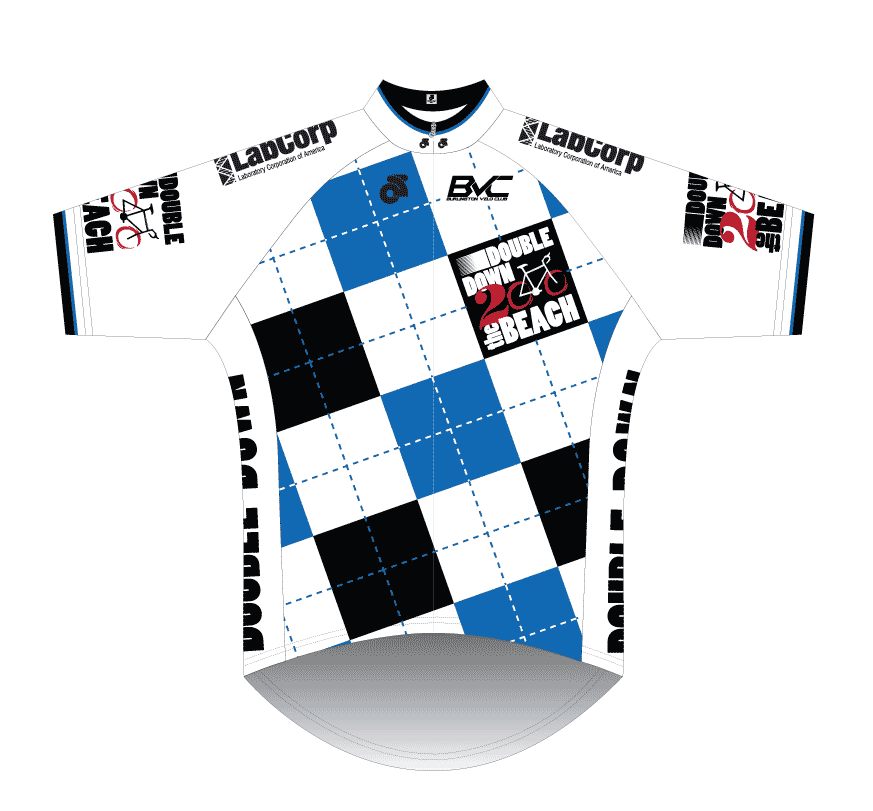
There is no prize associated with this ride short of a tshirt (that I am proudly wearing as I type this) and a window decal which will find its way onto my truck shortly.  The jersey was purchased (well worth the money).  So, what do I do to celebrate this milestone event in my life.  I do something crazy that's what I do!


I take my bike to Wrightsville Beach to dip the rear tire in the ocean.  The plan was to ride out the last few miles, but my legs were toast, it was getting dark, and safety was an issue based on the route I would have to take.  So what I cheated a little bit....I rode from Greensboro to Wilmington at an average of 18.1 miles....cut me some freakin' slack and let me have my moment!

Speaking of water, both me and the bike needed a bath after this ride.  I'll leave you with some pictures of what 212.21 hard miles will do to a bike and rider.


Nope....this is not tan lines.  This is road gunk.


Blisters on my ankles from my shoes....but pain is temporary, and success is forever!!!!!!

Monday, June 3, 2013

2013 DD2TB, Did I confuse tough and stupid again?


Part 1: The Intro
Part 3: The Recap

For those of you who have been following me this year, you are already familiar with my training for the 2nd annual Double Down 2 the Beach which takes place on June 8th....just five days away now.  In all of the communications about this ride that I have read, there is one post that has really hit me in such a way, that I had to borrow it for the title of this entry.  The exact quote from Jimmy Knight reads "6 days, wondering if have gotten tough and stupid confused AGAIN".  There is no doubt that he is not alone in that thought.  While I haven't put it into words, that's exactly how I feel about this ride at this point.

As you can see from the map at the top of this entry, this is no short bicycle ride.  That red line represents 207.4 miles....over a third of the 560 miles that the state is wide!!  I'm not even a fan of driving that far in one sitting, but on Saturday I'll be riding a 17LB bicycle that distance in the course of one day.  Why would anyone want to do that, subject their body to that kind of strain?  Is it the sticker we get, maybe the t-shirt, maybe the free Subway sandwiches at the midpoint?  No...none of that is even remotely worth what a body goes through in 200 miles of riding.  So....why in the world do we do this?  Simple, we do this ride to prove to ourselves that we can.  To be able to say that we did.  It is a badge of honor that means very little to others, and will be forgotten in time by them.  However, it is one of those accomplishments that can be looked back on years later and will give you a sense of absolute pride in yourself and your abilities.

In the closing days of preparation (training is now behind me), I am left to really wonder if I'm really as tough on a bike as I think I am, or if I've bitten off more than I can chew?  I won't know the answer to that until the evening of June 8th, because I have never attempted this kind of mileage before.  All I can do is hope that my training has gotten me ready, that my prep work this week will have my body ready, and that my mind will be right for the ride.  One thing I have learned over the short time I have been a cyclists is that when it comes to achievements, the body is only a small percentage of what counts.  Well over half of the ingredients for success is purely mental.  Something as simple as replacing "I think/hope I can" with "I will do this" can mean the difference between success and failure.  That's not to say its all mental.  There has been a lot of preparing of my body for this ride, and it started in earnest on January 1st when I rode 50 miles in a cold rain.  I've been shooting for this goal every day since that ride.  Even one of my other goals helped me for this ride.  The Assault on the Carolinas 100K ride was a brutal climb, but even though I had never climbed anything remotely like that, I did it.


I have done a lot of riding this year....A LOT!!!  As of today, I have ridden 2,885 miles since that first ride on Jan 1st.  I have put time on the trainer, I have worked on climbing, I have worked on speed, and I have worked on endurance in all of those miles.  I have become a better cyclist that I have ever been before.  Just with that, I am counting everything as a success....but is it enough, enough to get me through Double Down?  I think.....no......IT IS ENOUGH!  I will complete this ride!  I know this because of how I've improved on my century rides since last year.  The major difference is I can now go and ride a century at the drop of a hat because I feel like it.  Its not a special occasion for me anymore.  This is good, because I have needed to do many more century rides to really dial in my nutritional needs for this one double century.

Lets look at the significant rides I've done for training this year.  I have completed 11 different metric centuries (62+ miles) with many of them going well into the 70-80 mile range.  I have completed two full century rides (100+ miles), and two additional 200K (124 miles) rides.  Three of the four century+ rides I did happened in the month of May.  Folks, that is a lot of time in the saddle of a bike.  Also, keep in mind that my training rides are almost always solo.  So, for about 7 hours I have only myself to talk to, and the only thing I have to discuss is what gear I'm in, how far back that truck is, and what turn do I make next.  Needless to say, I enter into a deep philosophical place at some point and just meditate.


As you can see from the elevation profile, there is not going to be any significant climbing involved in this ride which is the only reason I signed up for it.  There will be a lot of pedaling though...just a constant barrage of pedal strokes until the end of the route.  The key is to keep a high cadence so that the muscles aren't worked overly hard.  Its all about pacing and conserving energy.  Fortunately, there will be somewhere between 100-130 other cyclists on this ride.  We won't all be together, but there will be clusters of groups.  This will help conserve, or more accurately share the workload.  Just the person on the front of the paceline will be doing the lion's share of work, and that slot will rotate out regularly to allow for rest.  There will also be conversation, hopefully to include something other than "are we there yet?"  Group rides go much quicker, and easier than solo rides, so I'm really hoping that 207 miles in a group feels easier than 124 miles solo.  The theory is sound, I'll know for sure in less than a week.


In addition to physical training for a ride, there are also equipment concerns that come into play.  Before a ride of this magnitude, you want to make sure that everything works as it should.  So far this year, I have replaced the bottom bracket, cables, brakes, cleats, and fine tuned the shifting throughout.  At the end of last year, I had developed cracks in my rear Mavic Ksyrium wheel which prompted me to purchase a set of Zipp 101's and send my compromised wheel back for warranty repair.  In the short time that the Zipp has been on, I have had problems with keeping it true, but finally worked that out.  Right about the time that I participated in the Assault on the Carolinas in mid April, I started to hear a clicking sound.  It took some time really tell where the noise was coming from, but after some trial and error, it was determined to be my rear Zipp.  So, with just over a month until Double Down, I took the wheel off, stripped it and left it with my local bike shop for return to SRAM to repair it.  Fortunately, I had my Mavic wheelset back and working as a replacement.  They are heavier, and not as aerodynamic, but they are round and allowed me to keep training.

While I was waiting for the Zipp wheel to go back to SRAM, I kept wondering about something.  When I was taking the cassette off of the Zipp wheel, the retaining nut was looser than I would have liked.  That was possibly causing the noise, but I wanted to make sure that everything was right with the wheel, so I kept with the plan to send it back.  Unfortunately time ticked by, and the wheel never left the shop.  On my third call to check on the status, I found that they were still waiting for SRAM to authorize the return.  I was now within 10 days of needing the wheel back....not enough time.  Screw it!  I decided I would put it all back together and torque the nut down and hope.  Well, after 75 miles, there is no more noise.  So, I have to assume that the last one to pull the cassette off (not me) was to blame for the noise.  At least I have the wheel back, mounted to the bike, and ready for a double century.  Being lighter, and more aerodynamic will allow me to use less energy over the course of the ride, and quite frankly, that is of utmost importance on a ride like this.


One of the improvements that I made to my bike long ago in order to help me with longer, self sustained rides in the summer was this nifty bottle carrier for the back of my saddle.  I've used this countless times, and really like it.  However, when I was loading my saddle bag with a 2nd spare tube I found the right mounting screw had broken, and there was only one screw holding this contraption on.  That was just not enough, and the screw was a special piece and I didn't have any laying around.  Hmmm, decision time.  I could go out and try to source a spare screw, or I could just take the whole thing off.  I decided on the latter for one reason.  I didn't really want the weight of 50 more ounces of liquid on the bike when we were lucky enough to have rest stops every 30 miles with water and gatorade.  I wasn't going to have to rely on what I could carry for once, and two bottles will easily cover me for 30-40 miles, even in the heat.  So, for the first time in well over a year, I have shed the rear cages.


With the rear bottle cages off, I had an opportunity to get a new tail light and mount it higher on the bike than what I had had before.  I chose to get a Flea 2.0 recharable light that has a blinking run time of 12 hours which will be plenty for all of my rides except for Double Down.  I'll keep my existing tail light on as a supplement for this ride since it is battery operate.  The flea is a good bit brighter and should be more visible during the day.  I like that it mounts directly to my saddle bag instead of to the seat post which makes it less visible in my opinion.  Lighting is going to be an issue on this trip at the beginning and possibly the end if I'm out past sun down.  I will also be using my Serfas headlight which is also rechargable, but will only last long enough for the beginning and end, and any rain that we might run into.  I won't be able to leave it on for the whole ride.


Let the countdown start for the first pedal stroke of the ride.  I'm as ready as I will be, the bike is ready except for some last minute lubrication and fastener checks.  Toni is all set to provide some SAG support for me along the way, and to carry me back home when its all done.  All thats left to do is hydrate, and carb load starting Thursday evening.  It will be an epic journey across the state, and I can't wait to be able to say "I did it!" instead of "I'm planning to do it".  In a short time, I will know if this decision was because I'm tough enough, or if it was because I was stupid.

Thursday, May 2, 2013

Intro to the 2013 Double Down 2 The Beach Ride


Part 2: The Training
Part 3: The Recap

When you hear somebody say that they are going out for a bike ride I'm sure that several assumptions could be made.  Maybe, they mean that they are going to ride around the neighborhood a few times, it could mean that they are keeping track of mileage and will be doing 5 miles....possibly 25 miles.  This could be a serious rider who is going out for more like 50 miles.  There is even the chance that they are hard core and are going to ride what is referred to as a "century ride"...or 100 miles.  Craziness you say....ONE HUNDRED MILES?!?!?!?!?!?!  Nah.....that's not crazy at all.  I've ridden several century rides in the last couple of years and while very long, they are far from being a crazy distance.

Enter the "ultra-endurance" ride for those who just can't seem to get enough saddle sores, sore muscles, exhaustion, and of course, bugs flying down your throat.  I'm talking about rides in excess of 100 miles.  They are typically categorized as 200K, 300K, 400K, and in the case of this story, a double century.  Yes, that's a double ENGLISH century, a full 200 miles in one day!!  That's mind boggling to consider, so lets help illustrate just what we are talking about.  My best time for a century ride was about 5.5 hours at 18mph.  Lets just double that time and make it 11 hours in the saddle.  An average work day is only 8 hours.  Figure in several breaks, and you will have easily 13-14 hours invested in a single bike ride.  In that time, your body will consume roughly 7000 calories, or more depending on your body.  Even on the longest day of summer, this bike ride will likely start and finish in the dark.

Well, on June 8, 2013, I will be going on a bike ride with about 150 other cyclists that starts before sunrise and leaves Greensboro, NC, and concludes in Wilmington, NC, later that evening.  The total mileage for the ride is reported at 218 miles clip in to clip out.  This is the second annual Double Down 2 the Beach put on by the Burlington Velo Club.  Last year's route finished in Myrtle Beach with comparable mileage.  I for one am happy that they have changed the destination because I would rather never see Myrtle Beach again....just not a fan.  Now anyone familiar with the state of NC will already realize that as you get out to the coast the terrain turns boringly flat.  Actually, there is a slight decline as you go further East.  Honestly, this is part of what drew me to this ride.  After the first century is over, its all downhill....just not enough to coast.  The second half will be an endless barrage of pedalling with no rest...but no climbs either.


As with other epic rides, there is a special jersey for this one.  Even though I have purchased it, I want to be sure and earn the right to wear it.  The only way to do that is to ride the ride, and complete it.  All it takes is 218 miles in one day on a Specialized Tarmac....simple, huh?  Not really all that simple.  While I have ridden several centuries, two already this year, there is more to this kind of ride than just saying I'm going to ride a little longer than normal today.  There is a fair amount of conditioning involved to get your body ready for the demands of that kind of ride.  There is also the mental part, which I think will be the biggest hurdle to get over.  The best way to do this is to get out and ride, and push yourself to go farther, and figure out what needs to change to make that happen.

Last year I wrote about my first self sustained century ride, and some things that I had learned from it.  Since that first attempt, I have gotten faster, but still prefer to go at these rides solo.  To date, I have only done one group century ride, and that was for the Bike MS Tour to Tanglewood last year.  I did learn the benefits of riding in a paceline or with other riders when it comes to saving energy.  I had read about it, but haven't really had the chance to put it to work on a long ride before.  At the end of that century ride, I still felt rather energized, and imagined I could go further.  That was the seed for my want to do Double Down this year.  I figured that if I worked on my energy management I could make the distance with very little problem short of a sore butt.


So, what are my training plans?  Well, I have actually done training for this ride in three stages.  Partially due to weather, partially for other events, and partially because it makes sense to do it this way.  Training began on January 1st when I set out on a 50 mile ride in the cold rain just cause riding on the first day of the year regardless of weather is what a cyclist does....and if a cyclist rode off a bridge, would I follow?  Possibly, but my sanity is not up for debate right now, maybe later.  In addition to being able to say I did it, I also set myself up for the right attitude for the year ahead.  After several cold rides, my body was saying enough and I could barely walk with the pain in my joints.  So, I took my training inside and found that my indoor trainer was actually a great training aid.  I learned how to do intervals, and would have about an hour workout almost every day of the week.  What I found was that my power was increasing, my heart rate was slowing under load, and I actually increased my max heart rate.  I would do short intervals, long ones, and lots of pedal drills.  Despite the cold weather outside, I was clocking about 100 miles a week in the winter!!!!

When the weather started to warm, I went outside much more often to ride.  What I found was my average speeds were still up in the range of where I was at the end of last season, and were actually creeping up gradually.  Even though my trainer sessions were about an hour in duration, I found that I could go much further before tiring on the road.  I even made 50 miles without unclipping once....that was a first for me, and I attribute it to all the time on the trainer.  This concluded the first phase of my training.


The second phase was the part that I was dreading....odd considering how much I hate doing intervals on the trainer!  It was time to get out and start conditioning my climbing legs in preparation for the 2013 Assault on the Carolinas.  I needed to get comfortable with climbing which has always been a weakness of mine.  While we don't have many category 1 climbs around here, I found all the small climbs I could and worked on pacing myself.  I knew enough about climbing to know it was far too easy to burn out early, and not have enough steam to finish the climb.  Distance wasn't my goal for this stage of training, but intensity was.  I punished my legs every chance I got in hopes it would be enough.  When the big day finally arrived, I completed the route much easier than I thought I would.

My training plan was paying off, and I now had a little under two months to prepare for my ultra endurance event.  After some down time to recover, and to get the bike repaired (killed the bottom bracket finally), I set into my long distance training.  Having completed a early season century ride at the end of March, I knew I had some work to do.  I had no problems until about 75 miles in, and I started slowing down, and struggling.  My averages were off, and I felt horrible, but I had my starting point.  I tweaked my diet a little before any longer rides, and started working in more metric century rides to condition my metabolism for distance rides.  After the AOTC, I wasn't concerned with climbing any more, and just wanted to get my body working as efficiently as possible.


On May 1st, I decided that it was time to test out my distance legs.  After getting very comfortable with 70+ mile rides, I thought that I could try to stretch my distance to a 200K route.  This was the first time I have ever tried that kind of distance.  The extra 25 miles might not seem like much, but it represents about 25% more mileage than I was used to.  This was going to be an exercise in mental control more than body endurance.  I knew that I had it in me to ride this distance, but also knew that I needed to slow my roll.  I set out very easy, staying in the little ring for the first 10 miles, and choosing an easy gear.  My speeds were around 15mph which was slower than I wanted, but the slow start was an investment in my finish later that day.  After the first 10 miles clicked by, I bumped into the big ring, and still took it easy.  Within the first 20 miles, my average speed was in the mid 18's which I knew was too fast.  I backed down again and watched my average speed drop into the area that I don't like to see....but again, this was an investment.

I have to say, slowing myself down had a result that I noticed at the 50 mile mark that surprised me.  My legs never even felt stressed until that 50 mile mark, and it was at that point, I felt like I was starting the ride.  Talk about a confidence booster!  It felt so good, in fact, that I didn't even try to grab onto the wheels of a pair of passing cyclists.  I just let them go on down the road and I stayed with my steady pace, which was now in the mid 17's.  My plan was to keep my average between 16.5 and 17.5 for the whole 124 miles.  The logic here is, to complete the Double Down, they are advising an average moving speed of 16, 14.5 with breaks.  I figured this would be a good benchmark for me to gauge how I will perform in June.

After a little over seven hours of ride time, and another hour and a half for breaks, I arrived home with 124 miles on the clock, and an average moving speed of 17.5mph.  I was tired, but not nearly as tired as my first training century a month before.  I was on the right track.  I should also mention that I did this ride solo, and self supported.  That means that my average speed is 100% my own work shared with nobody.  I consumed only the food and liquids that I could bring with me.  This is important to my training because I will not be riding a full 200 miles for training....EVER!  I need to make my shorter training rides more difficult so that I can do the longer ride without issue when it counts.  For Double Down, I will have other riders and we will all be sharing the work, and then take our turns resting in the pack.  There will be rest stops along the way so we can refill water bottles, and eat.  I am really hoping that doing a self sustained, solo 200K will be comparable to doing a supported, group 200 miles.


One of the biggest things that I need to concentrate on doing for this ride is watching my pace.  The idea isn't to do a 5 hour century, followed by a 7 hour century (due to fatigue).  Ideally, you want to maintain the same pace from start to finish, and make it a 6 hour century, followed by another 6 hour century.  This was what I have decided to work on more than anything else.  Pacing got me through the AOTC with energy to spare, and I will bank on being able to duplicate that with Double Down.  In addition to watching my pace, I will also be forcing myself to consume about 200-300 calories an hour of good solid nutrients to fuel my efforts.  I will also be taking in a lot of water because I'm sure by early June, I will be sweating much more than I am these days.  This is where SAG vehicles, and the rest stops really come in to play.  A ride of this distance would be nearly impossible without support.

Between now and June 8th, I will do one more century ride, possibly 150 miles in final preparation for the big day.  There will be several more metric century rides, and many shorter rides.  I need to continually condition my body for efficiency on the bike, and I need to condition my rump to accept sitting on a rather hard saddle for what is sure to be a very long day.  When I complete this ride, I will be able to check off one more thing from my 2013 bucket list.  I'll also be able to say I am an ULTRA endurance athlete!  Take that every one of my PE teachers throughout school.  I might have been the fat kid that couldn't throw a ball or run away from a bully....but I can pedal a bike sun up to sun down and cover 218 miles in that time.

For those of you who still think I am just a little crazy for doing this ride.  I have this to say in response....